
Does Hamilton Morris Consume Kratom?


- Key Takeaways
- Who Is Hamilton Morris and Why Does His Kratom Position Matter?
- What Is Kratom (Mitragyna Speciosa Leaf) and How Does It Work?
- Understanding 7-Hydroxymitragynine and Kratom's Active Alkaloids
- FDA Kratom Position: What the Regulatory Stance Means for Consumers
- Is Kratom Safe in 2024? Examining Current Research and User Reports
- Kratom Benefits: What Does the Science and User Experience Show?
- MN Nice Ethnobotanicals and the Ethnobotanical Definition in Context
- How to Choose Quality Kratom: Lab Testing, GMP Compliance, and Sourcing
- Practical Guide: How to Use Kratom Powder and Liquid Extracts Safely
- Where Hamilton Morris's Research Intersects with Kratom Science
- Frequently Asked Questions
Hamilton Morris has significantly shaped public understanding of psychoactive substances through his documentary work and scientific communication, but his personal relationship with kratom remains ambiguous. While he created the influential documentary “Kratom: The Forbidden Leaf” and actively promotes kratom research, there’s no definitive public confirmation that he regularly consumes the botanical. For those exploring kratom based on Morris’s educational content, starting with a sample pack to discover your preferred strains offers a responsible approach to understanding this complex plant with its varying alkaloid profiles and effects.
Key Takeaways
- Hamilton Morris has never publicly confirmed regular kratom consumption—his involvement has primarily been as a science journalist and research advocate
- Morris’s documentary “Kratom: The Forbidden Leaf” and interviews with leading researchers have significantly advanced public understanding of kratom’s complex pharmacology
- 7-hydroxymitragynine, kratom’s most potent compound, is present in concentrations generally under 0.02% in natural leaf but forms as an active metabolite of mitragynine in the body
- Research reveals that each kratom tree produces its own unique ratio of alkaloids, challenging vendor marketing claims about consistent strain effects
- Quality matters significantly—look for lab-tested, GMP-compliant products from trusted sources that follow American Kratom Association standards




Who Is Hamilton Morris and Why Does His Kratom Position Matter?
Hamilton Morris is a science journalist, documentary filmmaker, and research chemist best known for creating “Hamilton’s Pharmacopeia,” a documentary series that explores psychoactive substances through both scientific and cultural lenses. His unique background combines formal scientific training with compelling storytelling, allowing him to translate complex pharmacological concepts into accessible content for general audiences.
Hamilton Morris’s Background in Ethnobotany
Morris studied science as an undergraduate before transitioning into pharmacological research. His work focuses on investigating the chemistry, pharmacology, cultural context, and societal impact of various psychoactive compounds. This multidisciplinary approach has made him a trusted voice in discussions about substances that are often misunderstood or stigmatized.
In December 2017, Morris released “Kratom: The Forbidden Leaf” as part of Season 2 of “Hamilton’s Pharmacopeia.” The documentary investigated kratom’s pharmacology and traditional uses, featuring interviews with leading researchers, including Dr. Chris McCurdy, Dr. Oliver Grundmann, and Dr. Brian Pearson from the University of Florida. The episode was produced during a critical period when kratom faced potential federal scheduling in the United States.
The Role of Researchers in Public Kratom Discourse
Morris has actively promoted scientific research on kratom, recognizing that grassroots data collection is essential for developing evidence-based policies. He collaborated with Dr. Oliver Grundmann to promote a population survey of kratom users, emphasizing that “these surveys are really important” because they help gather basic information that can be cited in peer-reviewed scientific literature when facing regulatory challenges.
Morris demonstrated with his advocacy that highlights the importance of evidence-based approaches to drug policy rather than prohibition based on incomplete information.
What Is Kratom (Mitragyna Speciosa Leaf) and How Does It Work?
Kratom (Mitragyna speciosa) is a tropical evergreen tree native to Southeast Asia, belonging to the coffee family (Rubiaceae). The leaves contain over 40 alkaloid compounds, with mitragynine being the most abundant and 7-hydroxymitragynine being highly potent but present in much lower quantities.
Traditional Uses in Southeast Asia
For centuries, kratom has been used traditionally in Southeast Asian countries by manual laborers to combat fatigue and improve work productivity. The plant produces dose-dependent effects, with lower doses typically associated with stimulant-like properties and higher doses producing sedation effects.
Botanical Profile of Mitragyna Speciosa
Mitragynine exhibits complex pharmacology, including partial agonism at the mu-opioid receptor, antagonism at the kappa-opioid receptor, and activity at adrenergic, serotonergic, dopaminergic, and adenosine receptors. This multifaceted mechanism of action contributes to kratom’s varied effects and potential applications.
For those interested in exploring traditional Mitragyna speciosa strains, lab-tested kratom powder sourced directly from Indonesia since 2016/2017 offers consistent quality and authenticity.
Understanding 7-Hydroxymitragynine and Kratom’s Active Alkaloids
Kratom contains more than 40 identified alkaloid compounds. Mitragynine accounts for approximately 2% of kratom preparations by mass but represents up to 66% of the total alkaloid content. In contrast, 7-hydroxymitragynine, kratom’s most potent opioid-like compound, is present in concentrations generally under 0.02% in natural kratom leaf.
Mitragynine vs. 7-Hydroxymitragynine: Key Differences
Recent research has fundamentally changed our understanding of how kratom produces its effects. Studies revealed that 7-hydroxymitragynine is formed as an active metabolite of mitragynine in both human and mouse liver microsomes. This discovery suggests that individual differences in metabolism may significantly impact kratom’s effects, and that measuring only mitragynine content in products may not accurately predict their opioid-like potency.
How Alkaloid Content Varies by Strain
Research by Dr. Chris McCurdy and colleagues has shown that alkaloid profiles vary widely by tree, environment, season, and processing; commercial color labels don’t consistently map to alkaloid content. This finding challenges common vendor marketing claims about consistent strain effects based on vein colors (red, green, white) or geographic origins. Dr. McCurdy’s team has never found 7-hydroxymitragynine in kratom trees before harvest, suggesting that products with high 7-OH content may have been processed or adulterated.
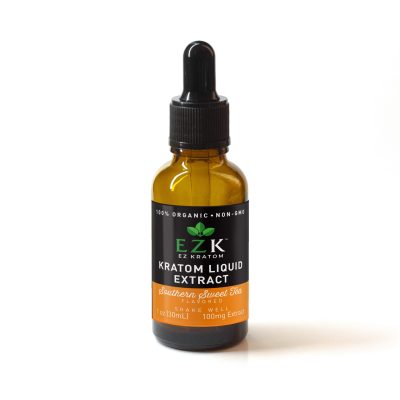
For those studying alkaloid effects and seeking fast-acting absorption, kratom liquid extract with 100mg mitragynine offers a consistent, lab-tested option with quicker absorption than traditional powders.
FDA Kratom Position: What the Regulatory Stance Means for Consumers
The FDA maintains a cautious stance on kratom, having concluded that it cannot be lawfully marketed as a dietary supplement. The agency has issued import alerts and warnings about potential risks, including contamination with harmful substances and adverse events.
How GMP and Lab Testing Address Safety Concerns
Industry self-regulation through organizations like the American Kratom Association promotes Good Manufacturing Practices (GMP) and third-party testing standards. These measures help address safety concerns by ensuring products are free from contaminants and accurately labeled.
For consumers seeking quality-assured products, the Kratom Sample Pack offers GMP-compliant, full-panel tested strains sourced from trusted Indonesian farms, aligning with quality standards expected by the American Kratom Association.
Is Kratom Safe in 2024? Examining Current Research and User Reports
Safety remains a central concern in kratom discussions. Recent research provides valuable insights into both the benefits and risks associated with kratom use.
The Importance of Third-Party Lab Testing
Product variability and potential contamination represent significant safety concerns. The FDA has warned about kratom products adulterated with synthetic opioids or containing dangerous contaminants, including heavy metals and harmful bacteria.
Red Maeng-Da Kratom Powder exemplifies quality standards with its lab-tested, organic, non-GMO formulation rated 4.97/5 by customers, backed by a 30-Day Satisfaction Guarantee for unopened packages.
Kratom Benefits: What Does the Science and User Experience Show?
User reports and preliminary research suggest various potential benefits from kratom use, though these remain unproven by regulatory standards.
Green Strains for Energy and Focus
Green vein kratom strains are commonly associated with balanced effects that support energy and focus without excessive stimulation. User reports suggest these strains may help with motivation and mental clarity during daytime hours.
Red Strains for Calm and Sleep Support
Red vein kratom strains are typically associated with more relaxing effects that may support better sleep and enhanced mental clarity. Traditional use patterns align with evening consumption for relaxation.
User Reviews and Common Outcomes
For those seeking morning energy as a caffeine alternative, white kratom for energy and focus offers lab-tested, GMP-compliant powder specifically noted for boosting morning energy. Similarly, yellow kratom for mood and concentration provides improved focus and mood-lifting benefits recommended for morning use.
MN Nice Ethnobotanicals and the Ethnobotanical Definition in Context
The term “ethnobotanical” refers to the study of how people of a particular culture and region make use of indigenous plants. In the commercial context, ethnobotanical vendors sell plant-based products that have traditional uses in various cultures.
What Ethnobotanical Means for Kratom Consumers
Understanding kratom as an ethnobotanical places it within a broader context of traditional plant use. This perspective emphasizes cultural heritage and historical applications rather than purely pharmacological or commercial frameworks.
Comparing Ethnobotanical Vendors and Standards
The ethnobotanical market includes various vendors with different quality standards and sourcing practices. Consumers should look for vendors that prioritize transparency, third-party testing, and ethical sourcing practices.
How to Choose Quality Kratom: Lab Testing, GMP Compliance, and Sourcing
Quality varies significantly across kratom products, making informed selection crucial for safety and effectiveness.
What Full-Panel Lab Testing Covers
Full-panel lab testing typically includes analysis for:
- Alkaloid content (mitragynine, 7-hydroxymitragynine)
- Heavy metals (lead, arsenic, cadmium, mercury)
- Microbial contamination (E. coli, Salmonella)
- Pesticide residues
- Moisture content
Why GMP Compliance Matters for Kratom
Good Manufacturing Practices (GMP) ensure consistent quality through standardized procedures for:
- Raw material sourcing and verification
- Processing and handling protocols
- Quality control testing
- Record keeping and traceability
- Facility cleanliness and maintenance
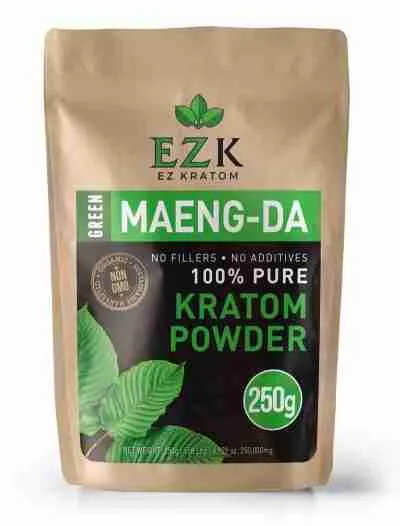
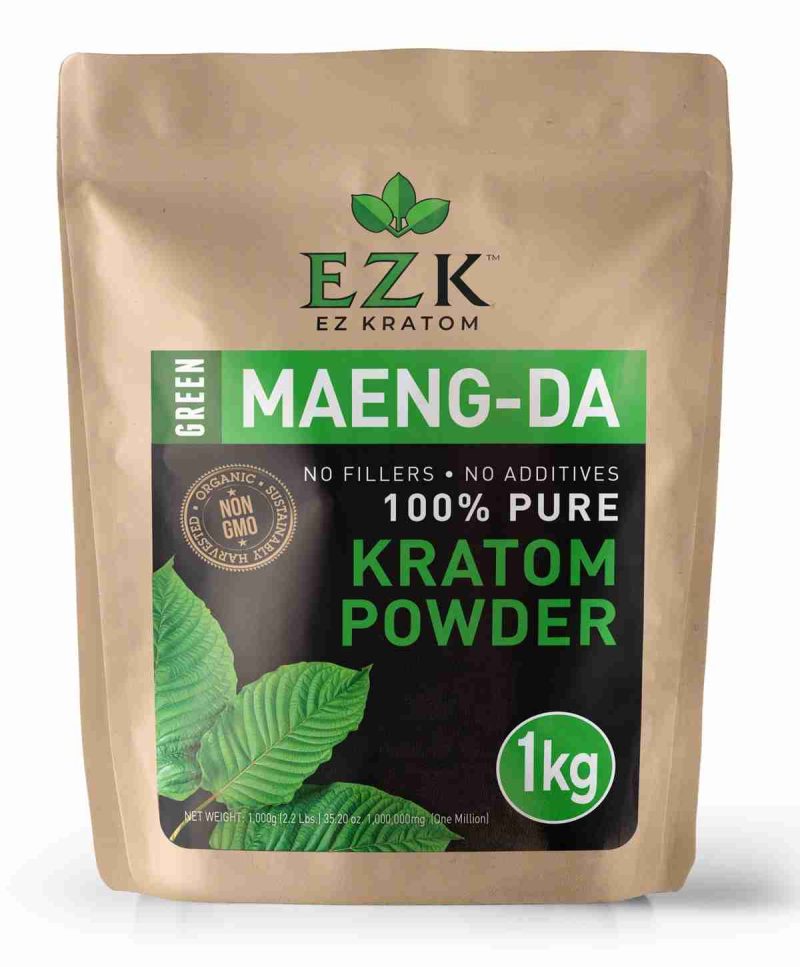
Green Maeng-Da Kratom Powder exemplifies these quality standards, being sourced directly from Indonesia by family-owned farms since 2016/2017, full-panel tested to meet AKA requirements, and packaged with GMP compliance.
Practical Guide: How to Use Kratom Powder and Liquid Extracts Safely
Responsible kratom use involves understanding appropriate dosing, preparation methods, and safety considerations.
Starting with a Kratom Sample Pack
For beginners, a sample pack to discover your preferred strains offers an excellent way to explore different effects without committing to large quantities. The pack includes 28g per strain (112g total) of organic powders imported directly from Indonesia, allowing users to identify which strains align with their desired outcomes.
When to Choose Liquid Extract Over Powder
Liquid extracts offer faster absorption and more precise dosing compared to powders. The kratom liquid extract with 100mg mitragynine provides a quicker onset of effects, making it ideal for those seeking immediate effects, packaged in UV-protected amber glass for stability.
Where Hamilton Morris’s Research Intersects with Kratom Science
Morris’s work bridges ethnopharmacology, alkaloid chemistry, and harm reduction principles. His documentary and interviews have helped translate complex scientific concepts into accessible content while advocating for evidence-based approaches to drug policy.
Morris’s Approach to Ethnobotanical Documentation
Morris combines on-the-ground reporting with scientific interviews, creating content that respects both traditional knowledge and modern research. His work in Thailand and other kratom-growing regions provides a cultural context that enriches scientific understanding.
The Importance of Science Communication in Kratom Discourse
By featuring leading researchers like Dr. Chris McCurdy and Dr. Oliver Grundmann, Morris has helped disseminate important findings about kratom alkaloids and their variability. This knowledge translation work empowers consumers to make informed decisions and challenges oversimplified marketing narratives.

Frequently Asked Questions
Q: Does Hamilton Morris publicly consume kratom?
A: While Hamilton Morris has extensively documented kratom through his work, there is no clear public evidence that he regularly consumes kratom. His involvement has been primarily as a science journalist, documentary filmmaker, and research advocate rather than as a disclosed personal user.
Q: What is 7-hydroxymitragynine, and how does it differ from mitragynine?
A: 7-hydroxymitragynine is kratom’s most potent opioid-like alkaloid, though it’s present in concentrations generally under 0.02% in natural kratom leaf. Recent research reveals that 7-hydroxymitragynine is actually formed as an active metabolite of mitragynine in the body, rather than existing in significant quantities in the raw leaf. Mitragynine is the most abundant alkaloid in kratom, accounting for approximately 2% of preparations by mass and up to 66% of total alkaloid content.
Q: Is kratom safe to use in 2024, according to recent research?
A: Recent research presents a nuanced safety profile. A large-scale survey found that about one-third of users report adverse effects, though most are mild and resolve within 24 hours. Only 0.6% of users sought medical treatment for adverse effects, and only 2% met criteria for moderate or severe kratom-related substance use disorder. Quality and purity significantly impact safety, making third-party testing essential.
Q: What does ethnobotanical mean in the context of kratom?
A: In the context of kratom, “ethnobotanical” refers to the study and use of kratom as a plant that has traditional cultural significance and applications in Southeast Asian societies. Ethnobotanical vendors sell plant-based products that have historical uses in various cultures, emphasizing traditional knowledge alongside modern applications. This perspective places kratom within a broader context of human-plant relationships rather than purely as a pharmacological substance.




Stay Informed with articles sent directly to your inbox
Get notified as soon as we post EZK news articles. This will help you stay informed and up to date on what is happening in the kratom industry, provide you with valuable tips on buying kratom wholesale, and so much more. We hope to see you on the list!
The information and articles on these pages are solely the opinions of third-party authors and not that of EZ Kratom or its owners or employees. EZ Kratom and its owners and employees in no way, shape, or form claim to be medical, scientific, or legal professionals and cannot be held responsible for and will not be liable for any inaccuracy or application of any information provided in these articles.
About EZ Kratom
EZ Kratom‘s mission is to provide top-notch bulk kratom and wholesale kratom powder while beating the competitors’ prices. It is hard to find consistent, premium quality bulk kratom or wholesale kratom powder on a regular basis. Here at EZK, we let the kratom speak for itself. Time and time again, we open our packages up to the freshest, cleanest smelling kratom powder, and we cannot wait to share our kratom powder with the entire wholesale kratom and bulk kratom community!
Shop Kratom
10,000+
Customers Satisfied

99.76%
Successfully Delivered

9+
Years Supporting the Community and Small Family-Owned Farms Throughout Southeast Asia

More Kratom Articles
EZ Kratom’s Official Registration With t...
Best Red Malaysian Kratom Options For Sl...