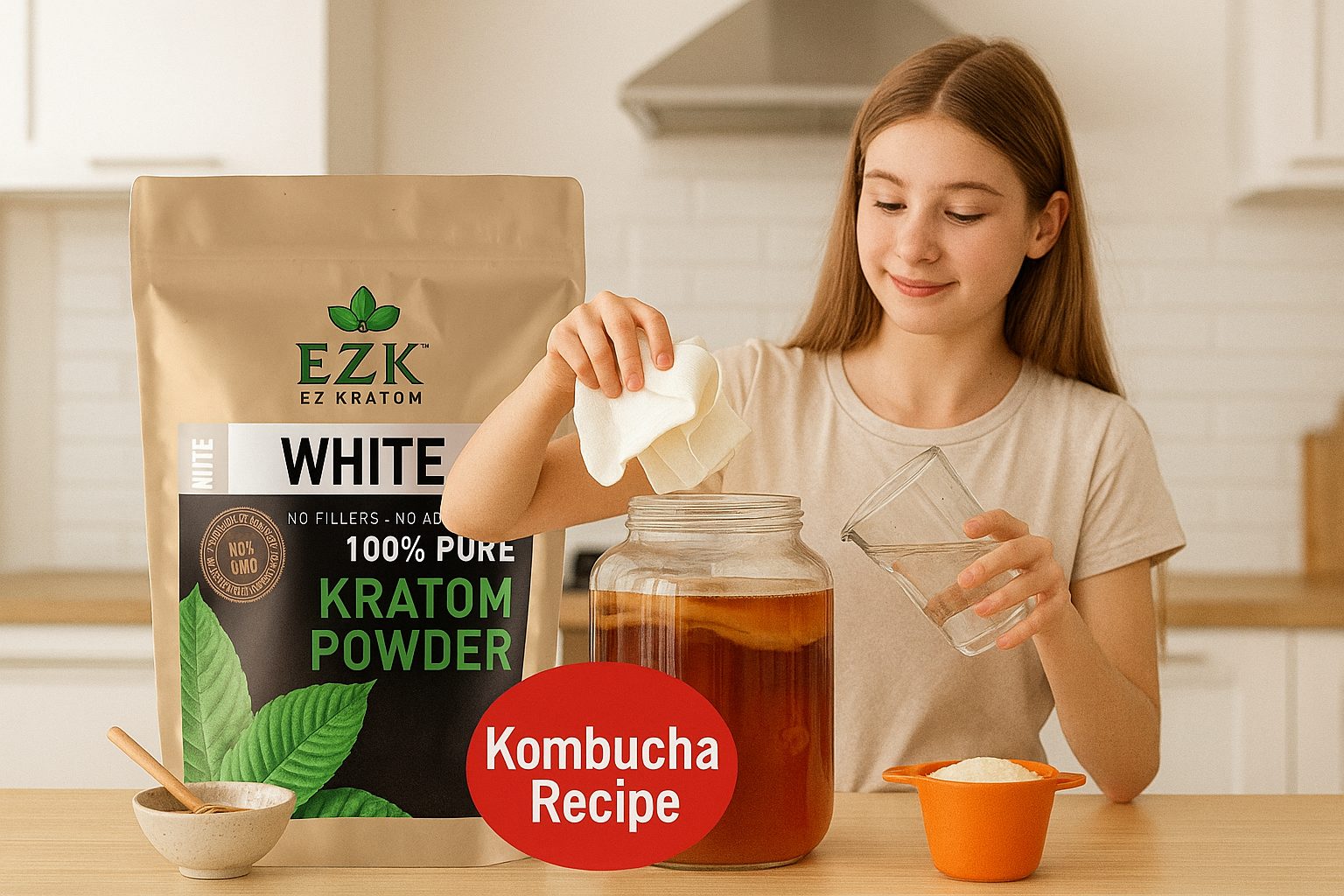
Best 4 Kratom Kombucha Recipes


- Key Takeaways
- 1) Classic Green Maeng-Da Kratom Kombucha (Morning Energy Blend)
- 2) Red Maeng-Da Kratom Kombucha (Evening Relaxation Formula)
- 3) White Maeng-Da Kratom Kombucha (Pre-Workout Energizer)
- 4) Yellow Maeng-Da Kratom Kombucha (Balanced Daytime Blend)
- Understanding Kombucha SCOBY: The Foundation of Every Recipe
- Kombucha Dangers: Safety Considerations and Kratom-Specific Precautions
- Fermentation Timeline: From SCOBY to Bottle
- Flavoring and Customization: Herbal Tea Combinations
- Storing, Serving, and Dosage Best Practices
- Legal Considerations: Is Kratom Legal in Your State?
- Why Choose EZKratom for Your Kombucha Ingredients
- Frequently Asked Questions
Kratom kombucha represents an innovative fusion of traditional fermented beverages with premium botanical extracts, creating a unique drink that combines the potential benefits of both ingredients. This experimental beverage aims to blend kratom’s energizing and calming properties with kombucha’s probiotic-rich profile for enhanced wellness support.
For those seeking to create their own kratom kombucha at home, starting with high-quality, lab-tested ingredients is essential. Lab-Tested Green Maeng-Da Kratom Powder serves as an excellent foundation for morning energy blends, offering consistent quality backed by GMP-compliant manufacturing standards.
The combination leverages kratom’s active compounds—primarily mitragynine and 7-hydroxymitragynine—which interact with opioid receptors to produce stimulant-like effects at low doses and sedative effects at higher doses. Meanwhile, kombucha provides beneficial probiotics, antioxidants, and organic acids through its fermentation process using a SCOBY (symbiotic culture of bacteria and yeast).
While this combination is not FDA-approved and represents an emerging trend in alternative beverages, careful attention to dosing, safety, and individual tolerance levels can help create a satisfying experience.




Key Takeaways
- Never add kratom during the first fermentation – Always add kratom powder after removing the SCOBY to avoid damaging the culture
- Start with low doses – Begin with 0.5-1 gram per 8oz serving and adjust based on individual tolerance
- Maintain proper pH – Ensure starting pH drops to 4.6 or below for safety; mature kombucha typically finishes at pH 2.5-3.5
- Use quality ingredients – Lab-tested kratom and organic tea with a healthy SCOBY are essential for safe, consistent results
- Verify local laws – Kratom legality and age restrictions vary by state and locality; always check current regulations
- Store properly – Refrigerate finished kratom kombucha at 35-40°F and consume within 2-4 weeks for optimal potency
1) Classic Green Maeng-Da Kratom Kombucha (Morning Energy Blend)
Green Maeng-Da kratom is specifically formulated to promote mental clarity and energy, making it ideal for morning kombucha blends designed to replace caffeine while supporting gut health through fermentation. This recipe creates a balanced beverage that provides sustained energy without the jitters often associated with coffee.
Ingredients for 1-gallon batch:
- 1 gallon finished plain kombucha (after first fermentation)
- 8-12 grams Lab-Tested Green Maeng-Da Kratom Powder
- ¼ cup organic cane sugar (for second fermentation carbonation)
- Optional: 2 tablespoons fresh ginger juice for enhanced flavor
Instructions:
- Complete your first fermentation of plain kombucha using organic black tea and cane sugar. This typically takes 7-12 days, depending on temperature and desired tartness.
- Remove the SCOBY and 1-2 cups of starter liquid for your next batch, then transfer the remaining finished kombucha to a clean 1-gallon glass container.
- Add 8-12 grams of Green Maeng-Da powder to the finished kombucha. This provides approximately 1-1.5 grams per 8-oz serving, suitable for beginners to moderate users.
- Add ¼ cup organic cane sugar to feed the remaining yeast for carbonation during the second fermentation.
- Seal the container with an airtight lid and let ferment at room temperature (68-78°F) for 2-4 days. Second fermentation typically takes 2-4 days for proper carbonation.
- Refrigerate to halt fermentation and serve chilled in 8-oz portions.
The green vein profile of Maeng-Da provides mental clarity without excessive stimulation. Effects typically begin within 20-30 minutes for kratom, with the probiotic benefits developing through regular consumption.
2) Red Maeng-Da Kratom Kombucha (Evening Relaxation Formula)
Red Maeng-Da kratom offers calming effects that promote better sleep and mental clarity, making it perfect for evening kombucha rituals focused on relaxation and digestive support. This recipe pairs red kratom with herbal tea bases to create a soothing end-of-day beverage.
Ingredients for 1-gallon batch:
- 8 cups of water
- 8 bags organic chamomile tea (or 2 tablespoons loose leaf)
- 1 cup organic cane sugar
- 1 healthy SCOBY with 2 cups starter liquid
- 10-15 grams Red Maeng-Da Kratom Powder
- 2 tablespoons dried lavender buds (optional)
Instructions:
- Brew the chamomile tea by steeping in 8 cups of hot (not boiling) water for 10-15 minutes. Add cane sugar while the tea is still warm and stir until dissolved.
- Cool the sweetened tea to room temperature (below 85°F) to avoid damaging the SCOBY.
- Transfer to a clean 1-gallon glass jar, add the SCOBY and starter liquid, and cover with a breathable cloth secured with a rubber band.
- Allow first fermentation for 7-10 days in a warm, dark place away from direct sunlight.
- After first fermentation, remove the SCOBY and starter liquid, then add 10-15 grams of Red Maeng-Da powder directly to the finished kombucha.
- Bottle in amber glass containers, leaving 1-2 inches of headspace, and let undergo second fermentation for 2-3 days at room temperature.
- Refrigerate immediately after the second fermentation to preserve potency and prevent over-carbonation.
The calming herbal additions complement red kratom’s natural sedative properties, while the kombucha’s acidity helps buffer the kratom’s earthy flavor. This blend is specifically designed for evening consumption when the body is naturally winding down.
3) White Maeng-Da Kratom Kombucha (Pre-Workout Energizer)
White Maeng-Da kratom provides energy-boosting benefits early in the morning and serves as an excellent caffeine alternative, making it perfect for active kombucha blends. This recipe creates a pre-workout beverage that delivers sustained energy without the crash associated with traditional energy drinks.
Ingredients for 1-gallon batch:
- 1 gallon green tea-based kombucha (after first fermentation)
- 6-10 grams White Maeng-Da Kratom Powder
- ¼ cup organic cane sugar
- 2 tablespoons fresh lemon juice
- 1 tablespoon fresh ginger juice
- Optional: pinch of sea salt for electrolyte balance
Instructions:
- Prepare your first fermentation using organic green tea instead of black tea. Green tea provides a lighter base that complements white kratom’s energizing properties.
- After 7-10 days of first fermentation, remove the SCOBY and starter liquid, leaving approximately 1 gallon of finished kombucha.
- Add 6-10 grams of White Maeng-Da powder to the kombucha, providing 0.75-1.25 grams per 8oz serving—ideal for energy without overstimulation.
- Mix in the cane sugar, lemon juice, ginger juice, and optional sea salt thoroughly.
- Transfer to swing-top bottles or other airtight containers suitable for carbonation.
- Allow second fermentation for 2-3 days at room temperature, then refrigerate immediately.
- Consume 30-45 minutes before physical activity for optimal pre-workout benefits.
The white vein energy profile works synergistically with green tea’s natural compounds, while citrus flavor enhancement masks kratom’s bitterness. The carbonation facilitates quick absorption, making this blend ideal for active individuals seeking natural energy alternatives.
4) Yellow Maeng-Da Kratom Kombucha (Balanced Daytime Blend)
Yellow Maeng-Da kratom delivers improved concentration and mood-lifting benefits, making it ideal for balanced all-day kombucha consumption. This versatile recipe creates a mid-day beverage that supports sustained focus without the peaks and valleys of traditional stimulants.
Ingredients for 1-gallon batch:
- 1 gallon oolong or rooibos tea-based kombucha (after first fermentation)
- 8-12 grams Yellow Maeng-Da Kratom Powder
- 3 tablespoons raw honey (instead of cane sugar for second fermentation)
- 2 tablespoons dried hibiscus flowers
- 1 cinnamon stick (optional)
Instructions:
- Brew your first fermentation using oolong or rooibos tea for a unique flavor profile that complements yellow kratom’s balanced effects.
- After 7-10 days of first fermentation, remove the SCOBY and starter liquid from the finished kombucha.
- Add 8-12 grams of Yellow Maeng-Da powder to create a balanced daytime blend with 1-1.5 grams per serving.
- Incorporate raw honey instead of cane sugar for the second fermentation—honey provides natural antibacterial properties while supporting carbonation.
- Add hibiscus flowers and an optional cinnamon stick for enhanced flavor and additional antioxidant benefits.
- Bottle in amber glass containers and allow second fermentation for 3-4 days at room temperature.
- Refrigerate and consume throughout the day as needed for sustained concentration and mood support.
The balanced alkaloid spectrum of yellow strains offers versatility for various serving occasions, while the kombucha’s probiotic retention supports ongoing gut health. This blend is particularly effective for mid-day focus when energy naturally dips.
Understanding Kombucha SCOBY: The Foundation of Every Recipe
The SCOBY (symbiotic culture of bacteria and yeast) is the living culture that transforms sweet tea into kombucha through fermentation. This cellulose pellicle contains acetic acid bacteria and Saccharomyces yeast that work together to create beneficial organic acids, probiotics, and carbonation.
How to Make Kombucha SCOBY from Scratch:
- Combine 1 cup of store-bought raw, unflavored kombucha with 1 cup of freshly brewed sweet tea
- Cover with a breathable cloth and secure with a rubber band
- Store in a warm location (68-78°F) away from direct sunlight
- A new SCOBY should form within 1-4 weeks as a thin film on the surface
- Once the SCOBY reaches ¼ quarter-inch thickness, it’s ready for brewing
SCOBY Health Indicators:
- Healthy SCOBY: Creamy white to light brown color, smooth texture, mild vinegar smell
- Contaminated SCOBY: Black, green, or fuzzy mold; foul odors; slimy texture
- pH Safety: Maintain pH levels between 2.5-3.5 to prevent harmful bacteria growth
Sourcing vs Growing Your Own SCOBY: While you can purchase SCOBYs from reputable sources, growing your own ensures you understand its history and health. Always use organic ingredients and non-metal utensils to avoid contamination. Store extra SCOBYs in a “SCOBY hotel” with sweet tea and starter liquid for future use.
Kombucha Dangers: Safety Considerations and Kratom-Specific Precautions
While kombucha and kratom can be safely combined with proper precautions, several safety considerations must be addressed.
Contamination Risks:
- Always maintain sterile technique when handling SCOBY and brewing equipment
- Use glass containers only—plastic can harbor bacteria and leach chemicals
- Monitor pH levels regularly; kombucha should maintain pH levels between 2.5-3.5
- Discard any batch showing signs of mold, unusual colors, or foul odors
Kratom-Specific Precautions:
- Follow local laws. Legality and age limits vary by jurisdiction; check city/county/state rules before purchase or use.
- Start with low doses (0.5-1 grams per serving) and monitor individual response
- Avoid combining with medications without consulting a healthcare provider
Alcohol Content Monitoring: Traditional kombucha contains less than 1% alcohol content, but extended fermentation can increase this level. For kratom kombucha, keep fermentation times consistent to maintain predictable alcohol levels.
When to Avoid Kratom Kombucha:
- Pregnant or breastfeeding women
- Individuals with liver conditions
- Those taking medications metabolized by liver enzymes (CYP3A4, CYP2D6)
- Immunocompromised individuals
- People sensitive to caffeine or alcohol
Fermentation Timeline: From SCOBY to Bottle
Creating successful kratom kombucha requires understanding the complete fermentation timeline and when to introduce kratom for maximum potency and safety.
Day 0-7: First Fermentation
- Brew sweet tea using organic black, green, or herbal tea
- Cool to room temperature and add SCOBY with starter liquid
- Cover with breathable cloth and store at 68-78°F
- Taste test after day 7—should be tangy but not overly vinegary
Day 7-8: Kratom Addition Timing
- Remove SCOBY and starter liquid for the next batch
- Add kratom powder directly to finished kombucha
- Never add kratom during the first fermentation, as it may harm the SCOBY
Day 8-12: Second Fermentation
- Add sweetener for carbonation (cane sugar, honey, or fruit juice)
- Seal in airtight bottles and ferment at room temperature
- Check carbonation daily by gently pressing bottle sides
Day 12+: Storage and Consumption
- Refrigerate immediately when the desired carbonation is achieved
- Consume within 2-4 weeks refrigerated for best quality
- Kratom effects typically begin within minutes and last for a few hours
Temperature significantly impacts fermentation timeline—warmer temperatures (75-85°F) accelerate the process while cooler temperatures (65-70°F) slow it down. Seasonal adjustments may be necessary to maintain consistent results.
Flavoring and Customization: Herbal Tea Combinations
Beyond the four main recipes, kratom kombucha can be customized with various herbal teas to enhance both flavor and potential benefits. The Kratom Sample Pack (4 Strains/28 Grams Per Strain) allows experimentation with multiple strains across different kombucha recipes to discover preferred combinations.
Top Herbal Tea Pairings:
- Hibiscus: Rich in antioxidants, adds tart cranberry-like flavor
- Peppermint: Supports digestion, provides a refreshing cooling sensation
- Ginger: Natural anti-inflammatory, adds spicy warmth
- Lavender: Promotes relaxation, complements red kratom blends
- Turmeric: Immune support, earthy golden flavor
- Rooibos: Naturally caffeine-free, sweet, nutty profile
- Oolong: Partially oxidized, complex flavor profile
Medicinal Synergy Considerations:
- Green kratom pairs well with ginger and lemon for morning energy
- Red kratom complements chamomile and valerian for evening relaxation
- White kratom works with peppermint and citrus for pre-workout focus
- Yellow kratom combines with hibiscus and honey for balanced daytime support
Flavor Masking Strategies:
- Use fruit juice (apple, cranberry, pomegranate) during the second fermentation
- Add natural sweeteners like honey or maple syrup
- Incorporate spices like cinnamon, cardamom, or vanilla bean
- Blend multiple herbal teas for complex flavor profiles
Storing, Serving, and Dosage Best Practices
Proper storage and serving techniques ensure maximum potency, safety, and enjoyment of your kratom kombucha creations.
Storage Guidelines:
- Refrigeration: Store at 35-40°F to halt fermentation
- Containers: Use amber glass bottles with UV protection
- Shelf Life: Best within 7–10 days refrigerated; discard if off odours, unusual fizz/pressure, film, or mold
- Pressure Management: “Burp” bottles daily during second fermentation to prevent explosions
Serving Recommendations:
- Portion Size: 4-8oz servings provide controlled dosing
- Kratom Dosage: 1-3 grams per serving based on experience level
- Timing: Morning blends for energy, evening blends for relaxation
- Frequency: Limit to 1-2 servings daily as recommended for kombucha consumption
Dosage Calculation: For a 1-gallon batch (128oz) yielding 16 servings of 8oz each:
- Beginner: 8-12 grams total kratom (0.5-0.75g per serving)
- Moderate: 16-24 grams total kratom (1-1.5g per serving)
- Experienced: 24-32 grams total (1.5-2g per serving)
Always use a digital scale accurate to 0.1 grams for precise measurements. Track your batches in a journal, noting strain, dosage, fermentation time, and effects to refine your recipes over time.
Legal Considerations: Is Kratom Legal in Your State?
Kratom legality varies significantly by location, making it essential to understand local regulations before creating or consuming kratom kombucha. Kratom use has become more common over the past two decades in the United States, but legal status remains complex.
Florida Kratom Laws: Is kratom legal in Florida? Yes, kratom is legal at the state level in Florida, though some local municipalities may have additional restrictions. The state follows the Kratom Consumer Protection Act framework, which establishes quality standards and age restrictions.
General Legal Requirements:
- Age Restrictions: Usually a 21+ requirement for purchase and consumption (varies by state)
- Vendor Standards: Reputable vendors like EZKratom follow American Kratom Association guidelines
- Quality Assurance: Products should be GMP-compliant and third-party lab-tested
- Local Variations: Check city and county ordinances for additional restrictions
States with Restrictions: Several states have banned or restricted kratom, including Alabama, Arkansas, Indiana, Rhode Island, Vermont, and Wisconsin. Always verify current laws in your specific location before purchasing or consuming kratom products.
Why Choose EZKratom for Your Kombucha Ingredients
EZKratom provides premium kratom powder ideal for kombucha creation, with extensive strain selection and quality assurance that ensures consistent results. All products are sourced directly from Indonesia by Family-Owned and Operated farms since 2016/2017, ensuring authentic, high-quality botanicals.
Quality Assurance Standards:
- Lab-Tested: Full-panel testing to meet American Kratom Association requirements
- GMP-compliant: Good Manufacturing Practices for consistent quality
- Organic and Non-GMO: Pure botanical ingredients without additives
- 30-Day Satisfaction Guarantee: Confidence in every purchase
Pricing and Value:
- Bulk Pricing: 1kg starts at $120, making regular brewing economical
- Sample Pack: $39.95 for 4 strains (28g each), perfect for recipe testing
- Free Shipping: Orders over $100 receive free shipping
- Subscription Savings: 10% off with the subscribe and save option
For kombucha brewing, the consistent grind and potency of EZKratom products ensure even distribution and predictable effects. The Kratom Sample Pack is particularly valuable for experimenting with different strain combinations to find your perfect blend.


Frequently Asked Questions
Q: Can you add kratom powder directly to kombucha during the first fermentation?
A: No, kratom powder should never be added during the first fermentation as it may harm the SCOBY (symbiotic culture of bacteria and yeast). The alkaloids and compounds in kratom can interfere with the delicate balance of bacteria and yeast needed for proper kombucha fermentation. Always add kratom after the first fermentation is complete and the SCOBY has been removed.
Q: How much kratom should I add per gallon of kombucha?
A: For a 1-gallon batch yielding 16 servings of 8oz each, use 8-12 grams for beginners (0.5-0.75g per serving), 16-24 grams for moderate users (1-1.5g per serving), or 24-32 grams for experienced users (1.5-2g per serving). Always start with lower doses and adjust based on individual tolerance. Use a digital scale accurate to 0.1 grams for precise measurements.
Q: Will fermentation destroy kratom’s active alkaloids?
A: Current research suggests that kratom’s primary alkaloids—mitragynine and 7-hydroxymitragynine—are relatively stable during the short second fermentation period (2-4 days) used for carbonation. However, kratom contains over 40 known bioactive alkaloids with varying stability. To preserve maximum potency, add kratom after the first fermentation and limit second fermentation to 2-4 days at room temperature.
Q: What are the signs of contaminated kratom kombucha?
A: Signs of contamination include black, green, or fuzzy mold on the surface; foul or rotten odors (beyond normal vinegar smell); unusual slimy texture; or colors other than the expected tea color. If you observe any of these signs, discard the entire batch immediately. Always maintain sterile technique and monitor pH levels between 2.5-3.5 to prevent contamination.
Q: How long does kratom kombucha last in the refrigerator?
A: Properly stored kratom kombucha maintains quality for 2-4 weeks refrigerated at 35-40°F. Store in amber glass bottles to protect from light degradation. The kratom alkaloids may degrade over time, especially in warm or humid conditions, so refrigeration is essential for preservation.

EZ Kratom's Popular Products



Stay Informed with articles sent directly to your inbox
Get notified as soon as we post EZK news articles. This will help you stay informed and up to date on what is happening in the kratom industry, provide you with valuable tips on buying kratom wholesale, and so much more. We hope to see you on the list!
The information and articles on these pages are solely the opinions of third-party authors and not that of EZ Kratom or its owners or employees. EZ Kratom and its owners and employees in no way, shape, or form claim to be medical, scientific, or legal professionals and cannot be held responsible for and will not be liable for any inaccuracy or application of any information provided in these articles.
About EZ Kratom
EZ Kratom‘s mission is to provide top-notch bulk kratom and wholesale kratom powder while beating the competitors’ prices. It is hard to find consistent, premium quality bulk kratom or wholesale kratom powder on a regular basis. Here at EZK, we let the kratom speak for itself. Time and time again, we open our packages up to the freshest, cleanest smelling kratom powder, and we cannot wait to share our kratom powder with the entire wholesale kratom and bulk kratom community!
Shop Kratom
10,000+
Customers Satisfied

99.76%
Successfully Delivered

9+
Years Supporting the Community and Small Family-Owned Farms Throughout Southeast Asia
More Kratom Articles
EZ Kratom’s Official Registration With t...
Best Red Malaysian Kratom Options For Sl...