
Kratom Legality 2025 – Is Kratom Legal in the U.S. and Worldwide?
At EZ Kratom, we believe in providing not only quality kratom products but also transparent, accurate, and legally safe information. Because kratom laws can change frequently, this page is designed to give you an overview of kratom’s legal status in the United States and internationally.
This information is for educational purposes only and does not constitute legal advice. Laws may change at any time, and customers are responsible for knowing their local and state regulations before purchasing. Please also review our Shipping Policy for details on where we can and cannot ship kratom.
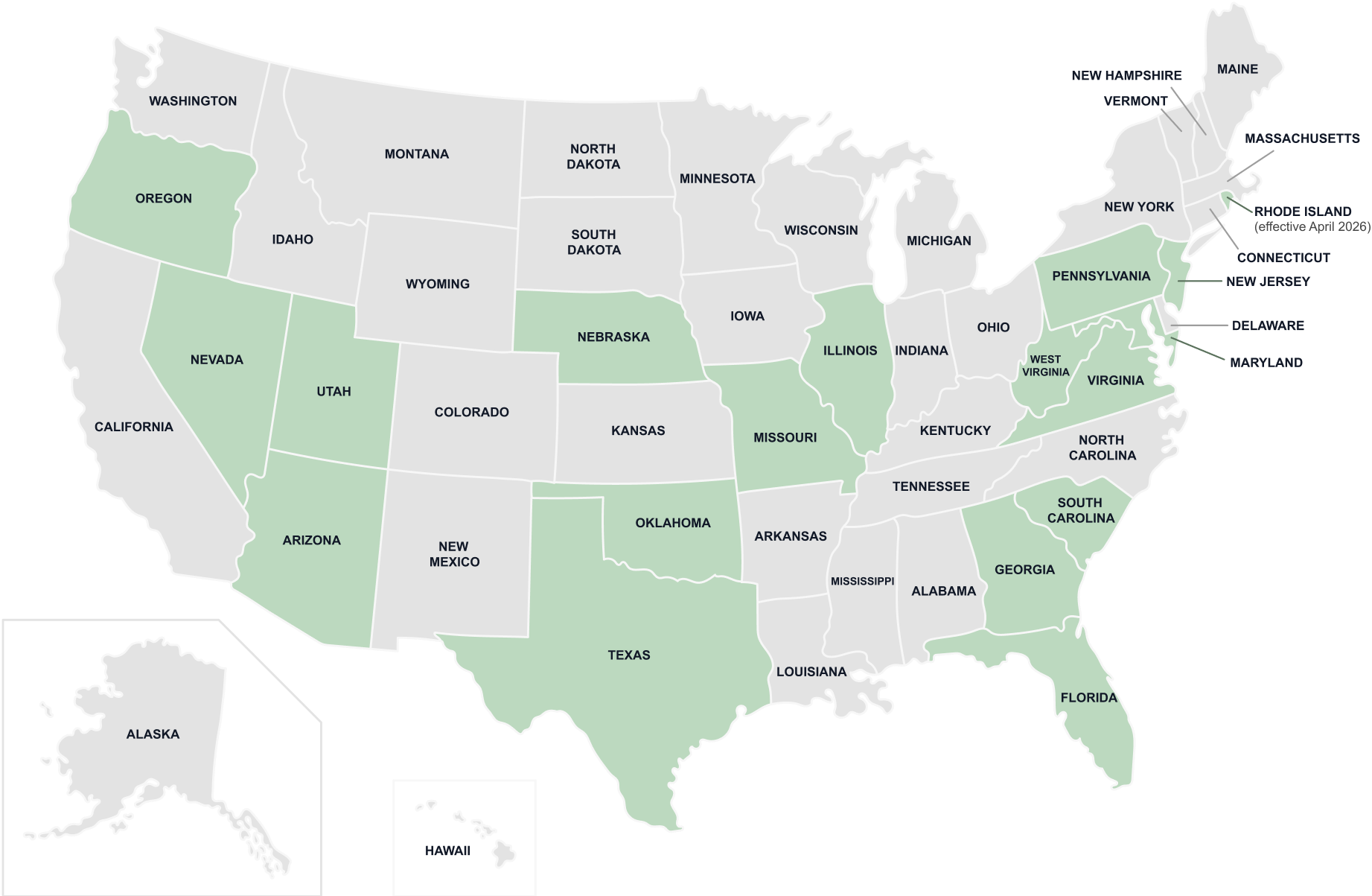
As of 2025, states that have enacted a KCPA or a similar regulatory act include:
Kratom Consumer Protection Act (KCPA and related laws)
The Kratom Consumer Protection Act (KCPA) is a state-level framework that several states have adopted in order to regulate the sale and distribution of kratom products, ensuring consumer safety and product quality. While some states have enacted the KCPA by name, others have passed similar or related laws with comparable requirements.
As of 2025, states that have enacted a KCPA or a similar regulatory act include:
Arizona, Florida, Georgia, Illinois, Maryland, Missouri, Nebraska, Nevada, New Jersey, Oklahoma, Oregon, Pennsylvania, Rhode Island (effective April 2026), South Carolina, Texas, Utah, Virginia, West Virginia.
These laws generally mandate:
- Labeling requirements – ingredient disclosure, alkaloid content, and health warnings
- Prohibition of adulterated or synthetic products
- Age restrictions – usually 18+ or 21+ depending on the state
- Testing standards – third-party testing for contaminants and product quality assurance.
What Is the Legal Status of Kratom?
![Federally[1]](https://ezkratom.com/wp-content/uploads/2025/09/Federally1.png)
Federally
Kratom (Mitragyna speciosa) is not a controlled substance under federal law. It remains legal to buy, sell, and possess in the United States except where restricted by state or local regulations.
![FDA-stance[1]](https://ezkratom.com/wp-content/uploads/2025/09/FDA-stance1.png)
FDA stance
Kratom is not FDA approved for any medical use. The FDA has issued warnings regarding possible health risks and contamination concerns.
![DEA-Drug-Scheduling[1]](https://ezkratom.com/wp-content/uploads/2025/09/DEA-Drug-Scheduling1.png)
DEA Drug Scheduling
Kratom is not currently scheduled under the Controlled Substances Act, but the DEA has listed it as a “Drug and Chemical of Concern.” DEA Drug Scheduling
Why Isn’t Kratom Legal Everywhere?
Kratom’s legal status varies due to differing opinions on its safety, potential for misuse, and lack of FDA approval.
FDA Position:
The FDA has raised concerns about kratom’s alkaloids (mitragynine and 7-hydroxymitragynine), stating that kratom has not been proven safe for medical use. It warns against kratom being marketed as a dietary supplement or treatment.
DEA Consideration:
In 2016, the DEA considered classifying kratom as a Schedule I drug, but public and congressional pushback prevented the ban. Since then, it remains unscheduled but closely monitored.
State Variations:
Some states have chosen to ban kratom outright, while others have adopted Kratom Consumer Protection Acts (KCPA) that regulate labeling, testing, and age restrictions
Kratom Legality by U.S. State
Below you’ll find a detailed state-by-state guide to kratom laws in the United States. Please note that local ordinances may differ from state law, and customers are responsible for reviewing their local regulations before purchasing.
EZ Kratom does not ship to any states, counties, or cities where kratom is banned. For more details on how these laws affect ordering and where we can and cannot deliver kratom products, please review our Shipping Policy.
Since 2016, Alabama has classified kratom and its active compounds, mitragynine and 7-hydroxymitragynine, as Schedule I controlled substances. This places kratom in the same legal category as drugs with no accepted medical use and high potential for abuse. Possession, sale, or use of kratom is strictly prohibited statewide, with criminal penalties for violations.
Kratom is legal statewide, with no current Alaska statute or regulation controlling it. In April 2025, the Anchorage Assembly considered an ordinance (AO 2025-50) to prohibit recreational use, possession, and sale of kratom within city limits, but the item was postponed indefinitely and did not take effect. Outside of any future municipal actions, consumers may legally buy and use kratom in Alaska. As with many states, keep an eye on possible local proposals.
Kratom has been legal and regulated under the Kratom Consumer Protection Act (KCPA) since 2019. The KCPA mandates labeling, quality testing, and restricts sales to those 18 and older. Vendors must ensure products are free from contaminants and meet state standards. Arizona’s regulated market supports safe access to kratom statewide.
Arkansas banned kratom in 2016 by placing its alkaloids under the state’s controlled substances list. This means that kratom is treated the same as other banned narcotics, and both possession and sale carry legal consequences. Residents of Arkansas cannot legally purchase or use kratom, whether for personal or commercial purposes.
Kratom is legal throughout most of California; however, the city of San Diego enacted a local ordinance in 2016 that bans the sale, purchase, and possession of kratom within city limits. Outside of San Diego, consumers are legally allowed to buy and use kratom products. As with many states, users should remain cautious of future local restrictions.
Colorado law allows kratom to be sold and possessed statewide, but some local jurisdictions impose restrictions. The city of Denver prohibits the sale of kratom for human consumption, meaning it can only be sold as a “not for consumption” product. Also, the towns of Monument and Parker have banned the sale of kratom entirely. Outside these areas, kratom remains legal in Colorado. Always check local ordinances and the latest state updates.
Kratom is currently legal statewide in Connecticut, but in June 2025 lawmakers enacted Public Act 25-101, which authorizes the Department of Consumer Protection to schedule kratom as a controlled substance by rule. Until the department issues a scheduling notice, adults may still purchase and possess kratom, but policy could change on short notice. Monitor DCP announcements and local ordinances.
Kratom is legal throughout Delaware with no state-level bans or regulations. Residents can freely purchase and use kratom products without restrictions. There are no active legislative proposals to change kratom’s legal status. Consumers should confirm local laws, as municipalities may impose their own rules.
Florida allows kratom statewide for adults 21+ under the Florida Kratom Consumer Protection Act (effective July 1, 2023). However, Sarasota County maintains a local ordinance banning possession and sale within county limits. Elsewhere in Florida, kratom may be sold subject to the state’s age restriction and rulemaking.
In 2019, Georgia passed the Kratom Consumer Protection Act (KCPA), which allows kratom to be sold legally but under strict guidelines. The law requires clear labeling of kratom products, prohibits adulterated or synthetic products, and restricts sales to individuals aged 21 and older. Georgia consumers can purchase kratom with confidence, provided vendors comply with these regulations.
Kratom is legal to buy and possess in Hawaii, with no statewide Kratom Consumer Protection Act (KCPA) in effect as of 2025. Consumers can purchase kratom online or in local shops, but checking local county regulations is recommended due to potential municipal variations. In 2025, proposed bills HB 717 and SB 463 aimed to establish a Hawaii Kratom Consumer Protection Act, which would have introduced registration and labeling requirements starting January 1, 2026. However, neither bill advanced – SB 463 was deferred, and HB 717 stalled in referral. Currently, no statewide restrictions are in force.
Kratom is legal in Idaho with no specific state restrictions on its use or sale. Residents can access kratom through online vendors or local retailers. There are no current legislative efforts to ban or regulate kratom statewide. Consumers should verify local ordinances for any municipal restrictions.
Illinois permits kratom for adults 18+ under the Illinois Kratom Control Act. Several municipalities ban sales (and in some cases possession), including Jerseyville, Alton, Glen Carbon, Edwardsville, and (since 2025) Godfrey. Outside these localities, kratom remains legal subject to the 18+ rule. Bills to expand regulation surface periodically but have not passed. Consumers should stay informed about potential legal changes and local bans.
Indiana is one of the states with a complete ban on kratom. Since 2014, kratom and its alkaloids have been classified as synthetic controlled substances under state law. This classification makes both the possession and sale of kratom illegal throughout Indiana, with criminal penalties for violators.
Kratom is legal statewide in Iowa, and there is no enacted age restriction. However, in 2025 lawmakers introduced SF 367 (would ban/schedule kratom) and HF 612 (a KCPA-style regulation with 21+ and labeling/testing). Neither has been enacted, so consumers can currently buy kratom in shops or online; keep an eye on these bills and any local ordinances.
Kratom is legal statewide in Kansas, and there is no KCPA in force and no statewide age minimum today. The 2025 legislature considered HB 2230 (a KCPA proposal with 21+ and product standards), but it remained in committee; an earlier HB 2084 (2023–24) also didn’t pass. Consumers may purchase kratom in stores or online, but future regulation is possible. Local ordinances should be checked for potential restrictions.
Kratom is legal in Kentucky, but a 2024 law restricts sales to those 21 and older. The law also mandates labeling and prohibits certain ingredients in kratom products. Previous attempts to ban or regulate kratom failed, maintaining its availability. Consumers should stay informed about local ordinances.
Kratom is illegal in Louisiana, classified as a Schedule I controlled substance under Senate Bill 154, effective 2025. The ban prohibits the sale, possession, or distribution of kratom products, equating them to drugs like heroin.
Kratom is legal in Maine but unregulated, with no statewide bans or age restrictions. Bills to ban or regulate kratom have failed, preserving its legal status. Consumers can purchase kratom freely, but local ordinances may vary. Staying informed about potential legislative changes is advisable.
Kratom is legal for adults 21+ under the state’s Kratom Consumer Protection Act (2024), which also sets labeling and marketing rules. Retailers may not sell to anyone under 21, and products must meet specific standards. While the law applies statewide, local municipalities may impose additional restrictions, so checking local regulations is advised.
Kratom is legal statewide but several municipalities have banned sales locally – including Lowell (effective Jan. 2, 2025), Dracut (effective Apr. 1, 2025), Chelmsford (effective Mar. 5, 2025), and Belchertown (Board of Health action Jan. 10, 2024). Statewide, lawmakers are considering ban bills (S.1558 and H.1680) in the 2025–26 session, but no statewide law has passed.
Kratom is legal statewide, with no active restrictions on possession or purchase. A 2019 proposal (SB 433) sought to classify kratom’s primary alkaloids as Schedule II controlled substances, but the bill did not pass. More recently, lawmakers have introduced regulation-focused measures such as HB 4061 (2023), modeled on the Kratom Consumer Protection Act, which would set standards for labeling, purity, and sales. None of these proposals have been enacted, leaving kratom unregulated at the state level for now.
Some local discussions about ordinances have taken place—most notably in cities like Warren, where officials considered restrictions in 2025. While no municipal bans are currently widespread, consumers should remain attentive to local rulemaking and future legislative sessions, as Michigan has repeatedly revisited the issue.
Kratom is legal statewide, but sales are restricted to individuals 18 and older. Under current law, selling kratom to a minor is classified as a gross misdemeanor, while possession by a minor is a misdemeanor offense. While kratom remains unregulated in terms of product quality, lawmakers have introduced bills modeled on the Kratom Consumer Protection Act (KCPA) in past sessions, aiming to establish standards for labeling, testing, and purity. None of these proposals have been enacted, so there are no statewide product safety rules in place as of now. Consumers can freely purchase kratom in its legal forms, provided they meet the age requirement.
At the local level, Minnesota has not seen a wave of municipal bans, but future legislation is possible, given the repeated attempts to formalize regulations at the statehouse.
Kratom is legal statewide in Mississippi under the 2025 law (HB 1077), which sets a 21+ age limit, bans synthetic or adulterated products, and adds a 25% excise tax on sales. Importantly, this law preserves local authority – cities and counties remain free to enact their own bans.
Over the past decade, more than 30 local governments in Mississippi have banned kratom through city ordinances or countywide resolutions. The Mississippi Bureau of Narcotics has acknowledged this trend in official reports, though it does not publish a full public list of jurisdictions.
Government code libraries or official publications confirm kratom bans in several jurisdictions, including:
- Counties: Lowndes, Lafayette, Union
- Cities: Brandon, Columbus, Corinth, Flowood, Gluckstadt, Oxford, Ridgeland
These bans appear in their municipal or county code portals, providing verifiable citations.
Advocacy groups and local media frequently report bans in additional counties (e.g., Alcorn, Calhoun, Itawamba, Monroe, Noxubee, Pearl River, Prentiss, Tippah, Tishomingo) and smaller towns (e.g., Ripley, Saltillo, Senatobia, Vardaman, Booneville, Bruce, Fulton, Pontotoc, New Albany, Iuka, etc.).
However, many of these jurisdictions do not publish their ordinances in searchable online code libraries. In those cases, the ban may still be valid, but the only way to confirm officially is to contact the city clerk, county Board of Supervisors, or review physical ordinance books.
Kratom is legal across Missouri, but regulation has been debated in recent years. In March 2025, the state House approved a version of the KCPA – Kratom Consumer Protection Act that would have required 21+ age limits, ingredient disclosure, and quality testing. However, the measure failed to pass the Senate, so no statewide framework is in place. Some local governments, such as St. Charles County has adopted their own rules – banning sales to minors and requiring vendors to register with the county. Consumers should review local ordinances while monitoring state legislative efforts.
Kratom is legal statewide in Montana, with no active regulations as of 2025. The 2023 bill (HB 437) that sought to ban kratom outright was defeated in committee. In 2025, lawmakers introduced HB 407, a regulatory proposal modeled after the KCPA, but that bill also failed to advance. As a result, there are no statewide age limits, testing, or labeling requirements, though debate around consumer protections continues in Helena. For now, kratom remains available without restriction, but consumers should keep an eye on future sessions.
Kratom is legal and regulated in Nebraska under LB 230, signed into law in May 2025. The act created a statewide KCPA – Kratom Consumer Protection Act, restricting sales to 21+, requiring vendors to meet labeling and product testing standards, and establishing a registration framework. Residents can legally purchase kratom from registered retailers, but under the new rules only.
Nevada passed its version of the KCPA – Kratom Consumer Protection Act in 2019, creating a regulated framework for kratom sales. Vendors must comply with testing, labeling, and quality control standards, and sales are limited to adults aged 18 and older. Thanks to these protections, Nevada residents have access to regulated, lab-tested kratom products.
Kratom is legal in New Hampshire for those 18 and older, except in Franklin, where it is banned. Consumers can purchase kratom freely outside Franklin, but local laws may vary. Monitoring legislative updates is recommended.
Kratom is legal in New Jersey with no statewide bans, but efforts to ban it have surfaced. Consumers can buy and use kratom. Pending legislation (New Jersey Kratom Protection Act, A5129) could introduce regulations or restrictions in the future. Check local ordinances for potential municipal rules.
Kratom is legal in New Mexico with no specific statewide bans or regulations. Consumers can purchase and use kratom. There are no current legislative efforts to restrict kratom. Local ordinances should be verified for possible restrictions.
Kratom is legal in New York with no statewide bans, but sales are restricted to those 21 and older. Legislative efforts to regulate or ban kratom are ongoing, so consumers should stay informed.
Kratom is legal statewide in North Carolina. The state has no enacted, statewide age restriction or kratom-specific regulations at this time; a 2016 proposal to restrict sales to minors did not become law. In 2025, lawmakers introduced a bill to regulate kratom (including a proposed 21+ age limit and retailer licensing), but it has not been enacted. Until new legislation passes, adults may buy and possess kratom statewide; keep an eye on potential local or future restrictions.
Kratom is legal in North Dakota, and there is no statewide ban or product standard in effect. In 2025, a bill to schedule/ban kratom failed; instead, lawmakers passed HB 1566, directing a study of kratom and potential future regulations. Consumers may buy and possess kratom statewide while policy discussions continue.
Kratom is legal statewide, but Ohio only permits it to be sold in natural dried leaf or powder form; local health departments have embargoed capsules, liquids/shots, and kratom in foods or dietary supplements.
There is no statewide age restriction at this time. In late August 2025, Governor Mike DeWine urged the Ohio Board of Pharmacy to outlaw all natural and synthetic kratom compounds, but the Board’s emergency meeting was canceled, so no ban took effect; the status could change quickly. Stay informed about legislative developments.
Kratom is legal in Oklahoma, with the KCPA passed in 2021 regulating sales and quality. Sales are restricted to those 18 and older, and labeling requirements apply. A previous bill to ban kratom failed, ensuring its availability. Check local ordinances for additional restrictions.
Kratom is legal in Oregon, but it is regulated under the Oregon Kratom Consumer Protection Act (HB 4010, 2022). The law restricts sales to adults 21 and older and requires clear product labeling, including ingredient disclosures and safety warnings. Consumers can purchase kratom products across the state. Local ordinances should be verified for potential restrictions.
In addition, Oregon’s law requires all kratom processors (any business selling or distributing kratom at wholesale) to register annually with the Oregon Department of Revenue before offering products for sale. Registration carries a fee, and processors must certify that their kratom has been third-party tested for contaminants such as heavy metals, pesticides, and microbial impurities. Violations can lead to civil penalties, and test results must be kept on file for several years.
Kratom is legal in Pennsylvania with no statewide bans, but a pending KCPA could introduce regulations. Consumers can purchase and use kratom . There are no significant legislative efforts to ban kratom currently. A 2022 bill (HB 2357) passed the House but died in the Senate, so there is no enacted 18+ law. Check local laws for possible municipal restrictions.
Rhode Island previously banned kratom by scheduling its alkaloids in 2017, but the state reversed the ban in 2025. The Rhode Island Kratom Act (H 5565A / S 0792A) was signed July 2, 2025 and replaces the ban with a regulated market (21+ sales, labeling/testing, taxation). Effective date: April 1, 2026. Until then, the 2017 ban remains in force.
Kratom is legal in South Carolina under the South Carolina Kratom Consumer Protection Act, which took effect in July 2025. The law restricts sales to adults 21 and older, requires clear labeling with ingredient and safety information, and sets rules for how products can be displayed at retail. With these safeguards in place, kratom can be legally purchased throughout the state, though – as in many places – consumers should remain aware of any future local restrictions.
Kratom is legal in South Dakota but regulated under a law that took effect in July 2025. Statewide rules set the minimum purchase age at 21, require labeling standards, and prohibit products that contain synthetic alkaloids or more than 2% 7-hydroxymitragynine in their alkaloid content. These measures make kratom available to consumers across the state while imposing safety limits on how it is manufactured and sold
Kratom is legal in Tennessee, but with restrictions. In 2018, the state clarified its law to permit kratom sales as long as products are natural, not synthetic, and properly labeled. Only adults aged 21 and over may legally purchase kratom. Vendors must also adhere to labeling requirements to remain compliant with Tennessee law.
Kratom is legal in Texas under the Texas Kratom Consumer Health and Safety Protection Act (effective Sept. 1, 2023). Sales to under-18 are prohibited, and products must be properly labeled and free from certain adulterants, including synthetic alkaloids; the law also caps 7-hydroxymitragynine at ≤2% of the alkaloid fraction. Check local laws for possible municipal restrictions.
Kratom is legal in Utah, regulated under the Utah KCPA since 2019, the first state to enact it. Sales are restricted to those 18 and older, with strict labeling and quality standards. Consumers can access regulated kratom products statewide. Local ordinances should be checked for additional rules.
Vermont has classified kratom’s main alkaloids as controlled substances, making the sale, possession, and use of kratom illegal. The ban has been in place for several years, although some advocacy groups continue to push for re-evaluation of kratom’s legal status in the state. Until then, kratom remains prohibited throughout Vermont.
Kratom is legal in Virginia for adults 21 and older. In 2023, Virginia added kratom rules to the Virginia Consumer Protection Act, making it illegal to sell to under-21 and requiring ingredient and warning labels statewide. Stay aware of future local actions.
Kratom is legal statewide in Washington and currently unregulated at the state level (no KCPA/age limit). In 2024–25, the Pharmacy Quality Assurance Commission considered scheduling kratom as a Schedule I drug but withdrew that rulemaking on Mar. 5, 2025; no ban took effect. Check local ordinances and ongoing regulatory discussions.
Kratom is legal but tightly regulated in West Virginia under the Select Plant-Based Derivatives Regulation Act: Kratom (W. Va. Code art. 19-12F). The law sets a minimum age of 21 for purchase and possession, and requires all retailers and processors to obtain permits from the state. Products must go through label approval before being sold, and strict compliance is enforced – violations can result in criminal penalties.
These rules are designed to create a controlled market with clear quality and safety standards. Businesses must stay up to date with registration timelines and any guidance issued by the state Department of Agriculture. While kratom is available statewide, consumers should also be aware of potential local ordinances that could impose additional restrictions.
Wisconsin classified kratom’s primary alkaloids, mitragynine and 7-hydroxymitragynine, as Schedule I controlled substances in 2014, making the sale, possession, and use of kratom illegal statewide. Advocacy groups have since pushed for reform, and several 2023–24 bills proposed replacing the ban with a Kratom Consumer Protection Act – style framework, but none advanced into law. As a result, kratom remains fully prohibited in Wisconsin at the time of writing.
Kratom is legal in Wyoming with no specific statewide bans or regulations. Consumers can buy and use kratom. There are no active legislative proposals to change its status. Local ordinances should be checked for potential restrictions.
Kratom Legal Status by Country
Here’s a quick breakdown of kratom’s international status (not exhaustive, subject to change):
Australia
Denmark
Finland
France
Ireland
Israel
Japan
Latvia
Lithuania
Malaysia
Myanmar
Poland
Romania
Russia
Singapore
South Korea
Sweden
Thailand (legalized again in 2021)
Canada – Legal to possess; not approved for human consumption.
Germany – Restricted, not marketed for consumption.
New Zealand – Prescription required.
Mexico
South Africa
Brazil
Czech Republic
Netherlands (not marketed for consumption)
Travelers should always check local laws before bringing kratom internationally, as penalties can be severe.
Shipping Restrictions
At EZ Kratom, we comply with all federal (US), state, and local regulations. That means we cannot ship kratom to states or municipalities where it is banned. Please review our full Shipping Policy for details before placing an order.
Disclaimer
This page is for informational purposes only and should not be considered legal advice. While we strive to keep this information up to date, kratom laws change frequently. Always confirm with your state legislature, local authorities, or a licensed attorney before purchasing or traveling with kratom.
For more information, see our Full Disclaimer and Shipping Policy page.
Frequently Asked Questions
Yes, you can travel with kratom between states where it is legal, and many consumers carry it without issue. However, if you enter a state or city where kratom is banned, authorities may confiscate the product. In some cases, you could also face legal consequences for possession in restricted areas.
At the federal level, kratom is not classified as a controlled substance and remains legal to buy or possess in most states. However, certain states such as Alabama, Arkansas, and Indiana have listed it as controlled. In these locations, both possession and sale are illegal and may carry penalties.
Yes, several states with the Kratom Consumer Protection Act (KCPA) or other laws require purchasers to be at least 18 or 21 years old. These age restrictions are in place to prevent sales to minors and to promote responsible consumption. Buyers should always confirm the age limit in their local jurisdiction before purchasing.
The American Kratom Association (AKA) provides an updated legality map and resources for consumers. In addition, many states publish details on kratom’s status through their official government websites. Checking both sources ensures you have the most accurate and current legal information.
GMP, or Good Manufacturing Practices, ensures kratom is produced with strict safety, quality, and consistency standards. Since most kratom is imported without regulated oversight, GMP certification helps guarantee purity and consumer safety.
Yes, domestically, but only within the states and localities where Kratom is legal. Kratom is not a federally controlled substance, so the Transportation Security Administration (TSA) does not regulate it on a federal level. However, a traveler’s possession of Kratom is subject entirely to the laws of both the departure and arrival locations (state, county, and municipal laws). If either your departure or destination point has banned Kratom, you cannot fly with it. As a powder, it is also subject to the TSA’s powder rules (over 12 ounces/350ml in carry-on may require extra screening).
No, you should not travel out of the country with Kratom. International travel is governed by the laws of the foreign country you are entering, and many countries, including several popular tourist destinations, have explicitly banned Kratom. Bringing Kratom into a country where it is prohibited, even if you are just passing through a layover, can result in severe legal penalties, including fines and imprisonment. Always check the specific laws of your destination and any layover countries before traveling.
Generally, no, not on standard drug tests (like a 5-panel or 10-panel screen), but specialized tests can detect it. Standard drug tests are designed to look for common illicit substances and do not typically screen for the specific alkaloids in Kratom, such as mitragynine and 7-hydroxymitragynine. However, some employers or organizations may utilize specialized, expanded panels that are specifically designed to detect Kratom metabolites. In rare instances, high concentrations of Kratom can also potentially trigger a false positive for certain other compounds, such as methadone, on initial immunoassay screens.
No, this is illegal and strictly prohibited. Shipping Kratom to any state, county, or municipality where it has been banned violates that locality’s laws. Major commercial carriers like UPS explicitly state in their terms and conditions that they will not transport any goods that are prohibited by federal, state, or local government law or regulation in either the origin or destination location. Doing so could result in the seizure of the product and potential legal liability for both the seller and the recipient.
7-Hydroxymitragynine (7-OH) is not currently scheduled as a controlled substance under U.S. federal law. However, the FDA has publicly recommended that the Drug Enforcement Administration (DEA) classify concentrated 7-OH as a Schedule I controlled substance, citing its strong opioid-like effects and high abuse potential. While this recommendation has not yet been adopted by the DEA, the FDA has clarified that 7-OH is not lawful to market or sell in dietary supplements or conventional foods under current law. Some states have already begun acting unilaterally: for example, Florida issued an emergency rule classifying isolated or concentrated 7-OH as a Schedule I substance, making its sale, possession, or distribution illegal under state law. Because the federal scheduling status is still pending, the legality of 7-OH may change. Anyone seeking to sell, possess, or distribute 7-OH should monitor developments in both federal and state law.